Data storage has shifted from floppy disks and USB keys to cloud data centers, while prices stop falling
In the early 2000s, personal storage meant 1.44MB floppy disks, 100MB Zip disks, 700MB CDs and 8MB USB flash drives, with entry-level PC hard drives around 10GB costing roughly $6 per gigabyte. Today, commercial hard drives reach 44TB and consumer SSDs about 8TB, but most data is stored remotely in data centers. Gartner estimates combined DRAM and SSD prices could rise 130 percent by year-end as institutional buyers outpace factory output.
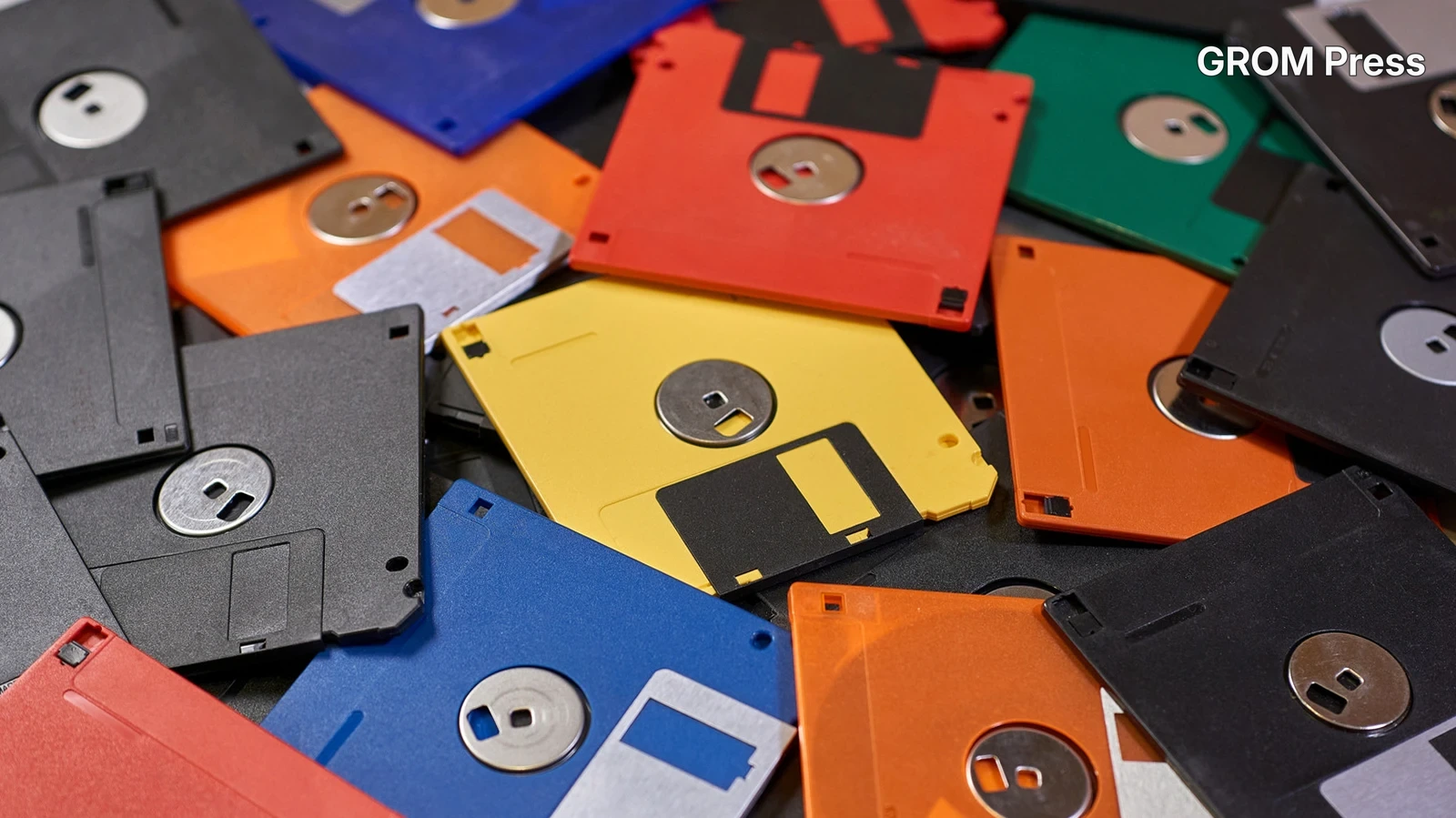
The main event is the long-term shift in personal data storage from physical media that users carried between machines to remote cloud storage managed by providers, accompanied by a reversal in the long trend of falling storage prices.
In 2001, a typical entry-level PC hard drive held about 10GB, and manufacturers quoted less than $60 for such drives, or about $6 per gigabyte. Users who needed to move files between computers relied on 1.44MB floppy disks, 100MB Iomega Zip disks launched in 1995 at $199 with disks costing about $20 each, or 700MB CD-ROMs. Sony was still selling tens of millions of floppies per year in 2002, even after Apple dropped the format from the iMac in 1998. Mass-market floppy production ended in 2011 when Sony, the last major manufacturer, stopped making them. The Federal Aviation Administration has said it will phase floppies out of air traffic control by 2028.
Iomega's Zip drive suffered a defect known as the "click of death," in which a failing drive repeatedly clicked while trying to read a disk. A class action lawsuit over the issue was filed against Iomega in 1998. CD-ROMs eventually displaced both floppies and Zip disks, while DVD burners such as Pioneer's DVR-A03 retailed for close to $1,000 in 2001, making them unaffordable for many households.
Read the full story on GROM.PRESS
Source: GROM.PRESS